

Extended Essay



-
The Extended Essay (EE) is an independent study of a focused topic, finishing with a 4,000-word paper that is mandatory for all students.
Students choose from a list of available Diploma Programme subjects that is normally one of the student’s six selected subjects for the IB diploma. This process starts in November of the student's junior year and concludes with the submission of the paper in January and the final student reflection in February of the senior year. Every student is appointed a faculty supervisor in the discipline of their paper. The process is supported and monitored in the Theory of Knowledge class.
A significant aspect of your extended essay experience is learning about what it means to be an ethical researcher. This important approach and mindset is something that you can take forward with you to future studies, work, and life in general.
Components of Ethical Research
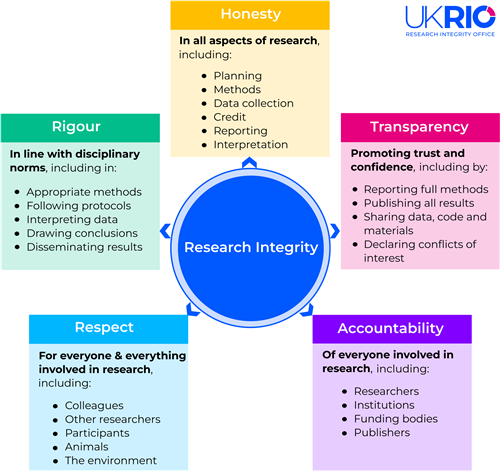
As shown in the figure below, your capacity to research ethically depends on:
- how well you understand and implement the principles and practices of academic integrity
- awareness of sensitivities around the topic being investigated, both from your point of view and the perspectives of people involved in your research
- awareness of ethical and safety issues relating to people or animals connected with your research
- awareness of any potential impact of your research on the environment.
Academic Integrity
In the world of research, academic integrity is essential. Readers must be able to trust the honesty and the accuracy of the information they read.
The extended essay may be your first step into the world and culture of research. See this as an important learning opportunity, focus well and take what you learn forward to future studies and work contexts. There are several strands to academic integrity in the extended essay.
It is essential that:
- Your work is authentically yours, with any help or support given by others clearly acknowledged. This guide includes advice on what forms of support are permitted and what support is not: see the “Support and supervision of the extended essay” section in this guide. You should be aware that your supervisor is only permitted to comment in writing on the final draft of your extended essay. You must do your own proofreading, carefully checking your extended essay draft to edit spelling and grammar, check formatting, and ensure you have not exceeded the 4,000-word limit.
- Those who read your essay can easily distinguish between your work and other people's work that you have used. Other people's work should be indicated by citations, footnotes, and entries in the reference list and bibliography, as appropriate. Word-for-word quotations must appear within quotation marks or be presented as indented paragraphs. Refer to the “Writing your extended essay” section of this guide for further guidance.
- Readers are able to trust that you are reporting your research and your findings as fully and accurately as possible.
In summary, authenticity is fundamentally important to the integrity of your work and your own personal integrity.
Your Own Work
You may be aware of individuals and websites that offer services ranging from correcting and editing your work to actually writing it for you. If you use these services and present their output as your own, this is dishonest and demonstrates a lack of integrity.
Note also the fine line between using software to check your spelling and grammar or to generate references for your reference list and bibliography, and using software that might write a complete essay when instructed. Most grammar and spell-checking software still requires you to check that its suggestions are correct and acceptable.
Using artificial intelligence (AI) to write an essay that is then presented as your own is dishonest and demonstrates a lack of integrity. Instead, think about how you might use AI software as a tool to help you in your research in a permissible, positive way. For example, material generated by AI can be considered as one of your resources, alongside resources gathered in more conventional ways (e.g., websites, academic articles, books), always acknowledged and cited appropriately. However, it is essential to verify and validate information generated by AI, possibly by corroborating it with data from other sources. Given the capacity of AI to “hallucinate”, it is wise to use more conventional search engines for the investigative stage of your research because these search for and list human-produced content. AI may also be used to help you compare and evaluate other resource materials.
For further guidance on the use of AI, refer to Appendix 6 in the IB Academic Integrity Policy, and the infographic: The IB and Artificial Intelligence Tools.
In summary, be clear that if you are found to have breached IB regulations on academic integrity or ethical research guidelines, you put your diploma at risk.
Your Values and Skills
As a principled learner:
- you will know how to cite and reference other people’s work and do this in all your work and other activities—academic integrity is not just for the extended essay
- you will be in the habit of “citing while writing” (instead of trying to find and add citations once the work is completed)
- you have learned and continue to learn how to use other people’s words and ideas, not to directly say what you want to say, but instead to support your own ideas and conclusions when you say them
- in your practical work, you do not fabricate data to fit what you think it should be; in your writing, you do not make up quotations to support your arguments nor attribute real quotations to the wrong people
- you learn from the feedback you are given and you learn from your mistakes.
If you put these ideas into practice, you demonstrate integrity, and your work reflects it—it is authentically your work.
-

- experience the excitement of intellectual
exploration - engage in student-led academic research
on a topic of personal interest - develop skills in research, thinking,
self-management, and communication - reflect on the learning experience of
producing an extended essay.

- Know and understand
- Apply and analyze
- Synthesize and evaluate
- Communicate research

- Framework for the essay
- Knowledge and understanding
- Analysis and line of argument
- Discussion and evaluation
- Reflection
- experience the excitement of intellectual

